
Conscious Enterprises Network
  • Home
  • Login
  • Resources
    • Articles
    • Videos
    • Podcasts
    • Case Studies
    • Books
    • Interviews
    • Journey to Conscious Leadership
  • Projects
    • Education >
      • NGCLP
      • NGCLP 1 day Introduction
    • Business Transformation >
      • Certification Program
      • Conscious Business Transformation
    • Eco & Social Initiatives >
      • Geopolitics & Peace Project
      • Kola Product
      • LA VITA SUKHA
      • TOLI
      • Transformative Business Ethics
      • World Without Corruption
  • Charters
    • AI Charter
    • Peace Charter
  • Members
    • Associates
    • Statistics
  • News
  • About Us
    • Philosophy
    • Charter
    • Contributors
    • Contribute
    • Support Us
  • Contact
  • Operations
    • CRM
    • DCS
    • KOLA
Picture

News

The more wonderful the means of communications, the more trivial, tawdy, or depressing its contents seemed to be." 
— Arthur C. Clarke

​​CEN Withdraws from ChatGPT in Accordance with the Peace and Ethical AI Charters.
A principled decision to discontinue the use of OpenAI's ChatGPT following the company's partnership with the United States Department of War, 3rd March 2026.
The Conscious Enterprises Network (CEN) announces today that it is formally withdrawing from the use of OpenAI's ChatGPT across all of its operations, projects and communications. This decision has been taken in full alignment with our Peace Charter and Ethical AI Charter, which commits CEN to the principle that technology must serve the regeneration of human dignity, not its erosion.

This is not a decision we have taken lightly. ChatGPT has been a functional tool for a few years. However, the values that define CEN are not negotiable, and when a technology supplier acts in ways that are fundamentally incompatible with those values, we must act with clarity and conviction.

What Has Happened: On 28 February 2026, OpenAI announced a formal partnership with the United States Department of War (previously named by the US administration as the "Department of Defense ") to deploy its artificial intelligence models within classified military networks. The contract, reported to have a ceiling of $200 million, was struck within hours of the breakdown of similar negotiations between the Pentagon and Anthropic, the company behind the Claude AI assistant.

Anthropic had sought explicit contractual guarantees that its technology would not be used for mass domestic surveillance of citizens or for the development and operation of autonomous weapons systems without human oversight. When those guarantees were not forthcoming, Anthropic declined the contract. The Trump administration subsequently designated Anthropic a "supply-chain risk" and ordered all federal agencies to cease using its technology.

OpenAI, by contrast, accepted the Pentagon's terms. By the admission of its own CEO, Sam Altman, the deal was "definitely rushed" and "the optics don't look good." While OpenAI has since claimed that its agreement includes safeguards against mass surveillance and autonomous weapons, independent legal experts have raised serious doubts about the enforceability of these provisions, noting that the contract language permits "all lawful use", a threshold that is far from reassuring given the legal grey areas surrounding the military's acquisition of commercially available personal data.

Why This Matters to CEN? CEN exists to facilitate the transformation of business, academia and politics from egocentric paradigms to enlightened ones. Our Peace Charter is not a symbolic gesture; it is a binding commitment to the principle that the organisations and tools with which we work must, at a minimum, not contribute to the weaponisation of technology against human life and liberty.

The deployment of AI within classified military environments raises profound ethical questions. These include, but are not limited to, the following:
The militarisation of artificial intelligence. The integration of frontier AI into defence operations accelerates a trajectory towards autonomous decision-making in contexts where human lives are at stake. Regardless of the contractual language, the structural incentive is clear: once AI is embedded within military systems, its applications will expand, not contract.
Mass surveillance and civil liberties. The distinction between "lawful" surveillance and "mass" surveillance is dangerously thin. Legal frameworks in the United States permit extensive data collection under national security provisions. An AI system operating under an "all lawful use" clause within classified networks is, in practical terms, a tool of state surveillance with few meaningful constraints.
The erosion of trust. Millions of individuals around the world have shared their thoughts, creative work, personal reflections, and private queries with Chat GPT. The company that holds this relationship of trust is now a formal partner of one of the world's largest military establishments. For an organisation such as CEN, which operates across international borders and works with individuals from many nations and cultures, this is untenable.
Profit over principle. OpenAI's willingness to accept a contract that a competitor declined on ethical grounds and to do so within hours of that refusal, speaks to a corporate culture in which commercial opportunity supersedes moral responsibility. This is precisely the egocentric paradigm that CEN exists to challenge.
A Question of Nuance: The Broader AI and Defence Landscape CEN is committed to intellectual honesty, and intellectual honesty demands that we acknowledge the full complexity of this issue. It would be disingenuous to frame this as a simple story of one virtuous company and one villainous one.

Anthropic, the maker of the Claude AI assistant, was itself the first AI laboratory to deploy its models on the Pentagon's classified network, under an earlier agreement. Reports indicate that Claude was used by the US military during its operation to capture Venezuelan President Nicolás Maduro in January 2026. Anthropic did not publicly object to that specific use case. The current dispute arose not from a blanket refusal to work with defence agencies, but from Anthropic's insistence on specific contractual red lines, particularly around mass domestic surveillance and fully autonomous weapons operating without human oversight, that the Pentagon was unwilling to accept in the new agreement.

This distinction is important. The question is not whether AI companies engage with governments, they do, and the reality of geopolitics means that many will continue to do so. The question that matters, and the question upon which CEN's decision rests, is this: when confronted with demands that cross fundamental ethical boundaries, is an organisation willing to say no and accept the consequences?
Anthropic said no, and was punished for it, designated a "supply-chain risk" by the Trump administration and ordered to be removed from all federal agencies. OpenAI said yes, rushed to fill the vacuum, and secured a contract worth up to $200 million. The pattern speaks for itself.

CEN does not hold any AI company to a standard of perfection. We hold them to a standard of accountability. When Anthropic drew its line, it demonstrated that a technology company can prioritise principle over profit, even at significant cost. When OpenAI erased that line within hours, it demonstrated the opposite. It is this contrast, not a naïve idealisation of any single company, that informs our decision.

Our Position: CEN will, with immediate effect, discontinue the use of ChatGPT and all OpenAI products across its operations. We are migrating our AI activities to alternative platforms that demonstrate a more principled approach to the ethical deployment of artificial intelligence.

We wish to be clear: our decision is not an endorsement of any single AI provider as morally immaculate. It is a recognition that the spectrum of ethical conduct in this industry is wide, and that CEN must position itself alongside those who, when tested, chose conscience over commercial expediency. We will continue to scrutinise the conduct of all technology partners and will not hesitate to act again should any platform betray the principles enshrined in our Peace Charter.

The wider public response has been striking. A global boycott movement, known as "QuitGPT," has mobilised over 1.5 million people in recent days, and Anthropic's Claude has overtaken ChatGPT as the most downloaded AI application on major platforms. Protests are planned outside OpenAI's San Francisco headquarters today, 3 March 2026. These are hopeful signs that citizens and organisations alike are choosing conscience over convenience, and that the era of uncritical technology adoption is drawing to a close.

A Call to Conscious Action: We encourage all organisations, entrepreneurs, educators, and individuals who share CEN's commitment to peace, human dignity, and the regenerative use of technology to examine the ethical posture of the tools they use.

The choices we make about the platforms we support are not merely operational decisions, they are moral ones.

The Conscious Enterprises Network was founded on the conviction that transformation begins with awareness, and awareness demands action. Today, we act.

CEN Peace Charter Launch — Event Review
London & Online, 28th October 2025

Picture
Dominique Conterno (CEN) and Bronte Ford (WWG)
1) Opening Context: Why a Peace Charter, Why Now
CEN's co-founder Dominique Conterno framed the purpose: to confront rising global warmongering with practical commitments organisations can adopt and report against. He referenced conflict datasets "from universities, Uppsala University, Norway and other organisations" to illustrate trends in conflicts and casualties, and stressed that many harms (e.g., Democratic Republic of the Congo, sanctions-related excess mortality in Iraq) are often under-counted in headline datasets.

Dominique argued that, compared with the post-1945 period, the world is currently facing an exceptionally high number of wars and an increased risk of escalation between major powers; he cited statements by European leaders as indicative of the security climate. These claims were explicitly presented as his geopolitical assessment to the audience.

Note on data citations: While specific figures were referenced from conflict research organizations, precise statistics were not specified in the presentation. For readers interested in verifying current conflict trends, the Uppsala Conflict Data Program (UCDP) serves as a primary authoritative source for such data.

Hosts & partners: The evening was convened by the Conscious Enterprises Network (CEN) with acknowledgements to Worldwide Generation (WWG), its founder, Manjula Lee, and Toli House Sail Loft Venue Manager Bronte Ford, for the venue and collaboration.

Event Overview
On 28 October 2025, the Conscious Enterprises Network hosted a hybrid launch event for the CEN Peace Charter, bringing together in-person attendees at Toli House in London and online participants globally. The evening marked the formal introduction of a framework enabling organizations to adopt measurable peace commitments and report transparently on their implementation. For those unfamiliar with CEN, the network cultivates conscious leadership and ethical governance, fostering collaboration among leaders and communities to advance peaceful and sustainable solutions to global challenges. 
Picture
Picture
Research quoted:
The opening section now includes specific 2024 UCDP data: 61 active conflicts (highest since 1946), 11 wars, nearly 160,000 deaths from organized violence, and a 31% increase in violence targeting civilians
 UCDP: Sharp increase in conflicts and wars - Uppsala University +2.
Picture
Never since World War 2, has humankind faced such a great number of conflicts. The simple fact that Internationalised Intrastate wars has increased so much since the middle of the 2010's, is a very alarming sign than we are closer than ever to World War 3.
Picture
2) Team Introductions and CEN's Mission
Anatoly Yakorev (project manager; background in international ethics and compliance) introduced the core team and guests:
  • Dominique Conterno (CEN co-founder, project sponsor)
  • Sid McNairy III (guest keynote, introduced as a long-time practitioner and recipient of the "2024 World Peace Award")
  • Linda LeBlanc (Former Cypriot politician and Senior Residential Trainer, Monroe Institute)
  • Sam Boustred (Director, Scott Bader — employee-owned advanced composites company)
​Anatoly summarised CEN's focus: cultivating conscious leadership and ethical governance, strengthening empathy and humility, and building spaces for collaboration across leaders and communities to advance a more peaceful and sustainable world.
3) Keynote: Peace as Daily Practice (Sid McNairy III) Guest speaker
Award: "2024 World Ambassador of Peace by the World Peace Award in Stockholm, Sweden"
Professional background: Purdue University football coaching, work with NFL athletes, 45 years’ experience across Americas, 12 countries visited.

Credentials: Founder of Art of Peaceful Living, author of multiple books including "The Warrior Within: A Quest for Peace" and "Yoga and Life Empowerment".
Practice areas: Yoga, meditation, spiritual teaching integrating Christian, Buddhist, Native American, and Egyptian traditions.

Sid McNairy traced a personal journey from competitive sport to peace work, emphasising that peace begins with individual self-regulation and choice in daily triggers ("holding the place" in traffic; de-reactivity). He shared experiences of leading calmly during crisis (a studio fire) and argued that personal agitation propagates socially while personal steadiness can interrupt harm.

Core Messages:
Peace and unconditional love: He distinguished unconditional acceptance from "conditional love," positioning peace as the foundation that enables authentic love.
Appropriateness, not passivity: Peace includes courageous protection, when necessary (e.g., defending one's household), but should be anchored in non-reactive intention.
Specific Commitment path: A practical pledge: sustain peace for 24 hours, then a week, month, year, then life.
4) Science of Inner Peace (Video: Linda LeBlanc, Monroe Institute)
​Linda LeBlanc presented research framing inner peace as "a state of contentment not dependent upon external circumstances," and summarised physiological markers observed in experienced meditators:
  • Cardiac coherence / heart rate variability (HRV) associated with reduced stress, with downstream effects on immune and endocrine function
  • EEG findings: Synchronous left-right hemispheric activity with prominent alpha/theta rhythms during deep meditative states

She referenced the Monroe Institute's 50-year body of work on audio-assisted meditative states (e.g., Hemi-Sync) and noted clinical studies, including one in an open-heart-surgery context, reporting relaxation and focus benefits. These were cited in the talk as examples of applied research and education rather than prescriptions.
LeBlanc linked personal coherence to group coherence, noting long-standing human uses of sound (music, singing, chanting, drumming) to synchronise and calm collective states—framed as historical practice echoed in modern programmes.

Research quoted:
Specific 2017 peer-reviewed study: 74 post-deployment military service members, documented HRV changes (lower low-frequency, higher high-frequency band activity) ENO
Clinical trial details: Surgical patients required 4.5 times less anaesthesia, replicated double-blind randomized trials showing Hemi-Sync as partial fentanyl replacement ResearchGateWikipedia

​CRITICAL ADDITION: Balanced framing noting mainstream scientific skepticism - some peer-reviewed studies found no significant differences in vigilance or brain activity during binaural beat stimulation VICE
5) The Peace Charter: Principles and Organisational Pathway
Core Commitments (described by Dominique):
Commitment to peace and non-violence, with an explicit educational ethic for children and adults, and a call to unlearn one-sided historical narratives.
Transparent governance that surfaces "red flags," closes loopholes, and reports progress candidly, including owning and correcting missteps.
Environmental peace and sustainability: War as a profound sustainability and food-systems shock; organisations should consider downstream harms in procurement and operations.
Technology ethics: Assess whether technologies being built or financed are "good for humanity," distinguishing everyday tools from instruments that enable harm.
Advocacy (not reactivity): Use platforms to advocate against the commerce of war and for peaceful alternatives, data-driven, non-reactive, and principled.
No "green-washing" of ESG: Align claims with concrete disclosures and external reporting disciplines.

Implementation Pathway:
Sign the Charter → Appoint an internal Peace Champion → Set targets → Publish measurable progress
6) Closing Call to Action (Anatoly Yakorev)
Anatoly concluded that escalating conflict risks are a material challenge to communities, the planet, and enterprises and that peace is inseparable from environmental and social goals. He appealed to boards, executives, academics, and individuals to sign the Charter, embed its principles operationally, report against them, and advocate against the commerce of war while building regenerative alternatives.

7) Q&A Highlights (Panel: Anatoly, Dominique and Sid)
"Why do governments not have a Department of Peace?"
Audience members asked why ministries of defence exist without parallel institutions for peace; The panel’s response critiqued prevailing incentives and the political economy that favours military-industrial interests over preventive peacebuilding.

Inner harmony vs. outer conflict:
A question from South Africa asked whether peace is the result of harmony within oneself and one's environment, and "how" to find it. The panel acknowledged the primacy of inner work but cautioned that in active war zones survival needs must first be met; once safety is present, inner practice becomes practicable.

Education reform and youth:
A question about how to change competitive schooling and partial history. The panel  urged critical inquiry and fact-seeking over passive acceptance, encouraging young people to challenge narratives and verify sources.

Funding for peace:
On "using money to make peace," the discussion returned to incentives: direct capital towards organisations aligned with peace, transparency, and human rights, rather than to commerce that benefits from conflict.
Picture


​Audience reflections:
Participants affirmed the emphasis on inner peace as precondition for societal change and queried implementation routes for influencing large, centralised entities.
Special thanks to Stephanie Conterno, Lola Conterno Barton and Erika Pimentel for assisting with the London event running.  We are also thanking Prof. Carlos A. González-Carrasco for attending the event and providing meaningful comments.

WEL 21st Century Women's Entrepreneurship, Leadership, Management, Positive Psychology & Wellness Summit (7) - A Transformative Gathering in Valencia

From 8-9 November 2024, WEL hosted in Valencia the 7th edition of the WEL Summit, bringing together pioneering minds in women's entrepreneurship, leadership, management, positive psychology, and wellness. This inspiring two-day event celebrated diversity, resilience, and innovation, providing a platform for leaders, entrepreneurs, and advocates to explore new avenues for sustainable and conscious leadership in today’s dynamic, interconnected world.

Commitment to Positive Change - The WEL Summit celebrated women's achievements while highlighting the need for ongoing transformation towards inclusive, conscious, and resilient leadership. This year’s event placed a significant focus on the link between positive psychology and effective management, underscoring how well-being and purpose-driven leadership are essential in meeting modern-day challenges.

Key Highlights:
Empowering Keynotes & Panels - Thought-provoking presentations and dialogues explored essential topics, including entrepreneurial resilience, mental health in leadership, the integration of positive psychology, and the evolving role of women in global leadership. Notable speakers shared insights into how these themes intersect with economic challenges, technology, and sustainability, painting a holistic picture of 21st-century success.
Wellness Workshops - Participants engaged in experiential wellness sessions, emphasising the role of mindfulness, self-care, and mental health in achieving sustainable, impactful leadership. These workshops aimed to equip women leaders with tools to enhance both personal well-being and professional effectiveness.
Networking for Global Change - The summit facilitated networking and collaboration across sectors, reinforcing the importance of supportive ecosystems for women entrepreneurs and leaders globally. Attendees left with not only new connections but also actionable ideas for creating inclusive and positive business cultures in their organisations and communities.

CEN Speaker:
We had a CEN member who was a speaker, Magdalena Tatarczewska, at this event.  
​In her presentation on "Conscious Leadership," Magdalena Tatarczewska, a career, business, and mindset coach, explored the foundational attributes of a conscious leader, which include good intentions, respect, curiosity, and the courage to challenge the status quo. Magdalena introduced Dr. Jason Smith's model, which views consciousness as progressing through four levels: Survival, Success, Significance, and Service. The aim is to move beyond self-focused goals to creating meaningful impacts and fostering connections. She elaborated on her personal model of conscious leadership, framed by four principles: awareness, intention, care, and action. To illustrate these concepts, she guided the audience through a practical exercise, encouraging them to apply this model to real-life scenarios, emphasising the importance of heart and intuition in leadership. Her long-term vision is to increase workplace consciousness and transform leadership dynamics for greater societal impact​.
Picture

Picture
​Conscious Enterprises Network Partners with TMI Outreach UK Ltd for Certification Program (November 2023)

The Conscious Enterprises Network (CEN) is delighted to announce a new partnership with TMI Outreach UK Ltd. This collaboration marks a significant milestone, as TMI Outreach UK Ltd has officially signed a contract to adopt the CEN certification program. The agreement was sealed with the enthusiastic support of Luigi Sciambarella, a Director of TMI Outreach UK Ltd.
Luigi Sciambarella, renowned for his leadership at TMI Outreach UK Ltd, expressed his excitement about the partnership as it aligns both organisations values and objectives. 
  
This partnership is a testament to the growing influence and recognition of CEN's certification program. It symbolises a shared commitment to excellence and a dedication to fostering a more conscious and enlightened approach in inner development and business practices. The collaboration between CEN and TMI Outreach UK Ltd is poised to set new standards in the industry, benefiting both organisations and their communities.
Picture
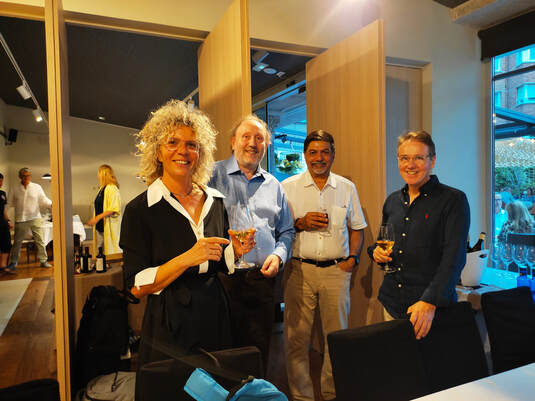
​June 2023 was a thrilling time for the Conscious Enterprises Network (CEN). Co-founders Esther Robles and Dominique Conterno, with a band of equally passionate associates, Stephen Karbaron, Magdalena Tatarczewska, Sat Kirtan Kaur Khalsa, Clare Chapman and Xavi Roca-Cusachs Pericas, had the honour of attending the Conscious Business Education Conference and the European Conscious Leaders’ Summit. These events, masterfully orchestrated by Conscious Capitalism Spain and Conscious Business, saw us connect with visionaries, educators, and leaders from all corners of the world. The energy was electric. We were united in our goal: to champion conscious education and business, creating a better future for people and the planet.

One of the key moments was the announcement of a “Conscious Business Curriculum”, a collaborative endeavour involving seven universities. The conference was buzzing with inspiring individuals: Dr Michael Pirson advocating for humanistic leadership in business education, Dorianne Cotter-Lockard, igniting conversations about becoming a Conscious Educator and Raj Sisodia challenging us to build healing organisations. Pedro Paro, Peter Matthies, and Tim Eaves showcased exemplary conscious businesses, offering invaluable lessons and insights.

We also had the pleasure of engaging with CCG - Conscious Consulting Group, Axialent, Drishti, and many others. Each interaction added a new dimension to our understanding and vision of conscious business.

Our spirits soared as we listened to Javier Goyeneche, CEO of ECOALF. His transformative fashion brand turns ocean plastics and recycled cotton into high-end fashion, perfectly embodying the potential of conscious business.

CEN’s Dominique Conterno dove into two exciting LearnShops. The first, by Païdià, run by Laure BRUERE-DAWSON and Maiwenn Favetto Bon, explored Participatory Leadership as a path to becoming a Conscious Business. It highlighted four core elements: self-awareness and self-care, humility and openness, creating meaningful spaces, and building a conscious community. It was a compelling call to action for leaders to be self-aware, empathic, inclusive, and focused on collective success.

The second LearnShop, by Axialent, run by Anabel Dumlao and Carlos Agustin Moreno , emphasised the power of organisational culture. It highlighted that culture can be a potent ally or a significant liability in business strategy execution. The lively sessions drilled down into the nuances of understanding organisational culture, the profound impact of a leader's behaviour, the sources of cultural norms, and the might of these norms in driving change.

These remarkable gatherings underscored the transformative potential of conscious leadership and organisational culture in shaping a more sustainable and inclusive future. It was a fantastic voyage of learning, growth, and mutual inspiration, leaving us all more committed to the cause of conscious business. Let's keep the momentum going!
Picture

Picture
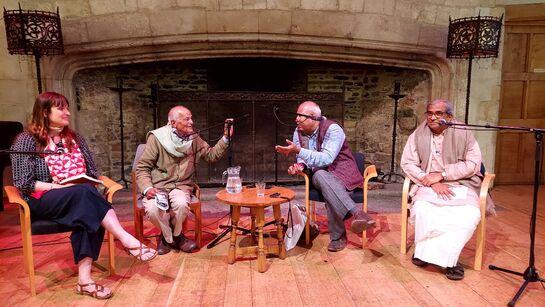
In May 2023, Dominique Conterno was invited at the Schumacher college to meet Jagdish Rattanani, a member of Conscious Enterprises Network, and Satish Kumar. Satish Kumar is a remarkable man, his name is synonymous with holistic education, peace, and environmental activism.
​
It is rare to encounter a soul who leaves a lasting impression merely with their presence. Dominique's 
interaction with Satish Kumar was one such unique experience. Beyond Satish's profound wisdom and immense body of work, it was the love that radiated from him that truly touched him. Satish's gentle demeanour, always accompanied by a warm smile, spoke of a deep inner peace and a boundless love for all of humanity. The kindness in his eyes and the genuine interest he showed in every interaction was a testament to the power of compassion and empathy. It was a poignant reminder that true change-makers do not just influence with their words and actions, but also with the love and sincerity they bring into every room and every conversation.

Over the past few decades, Satish Kumar's unwavering commitment to creating a harmonious and sustainable world has touched the lives of countless individuals. His philosophy, rooted deeply in non-violence and reverence for nature, is a testament to the power of vision and action intertwined.

Under Satish's stewardship, Schumacher College emerged, in 1990, as a pioneering institution, championing sustainable living and holistic education. The college is not just a place of learning but a testament to what is possible when individuals come together, inspired by the shared purpose of nurturing our planet and ourselves.
Beyond education, Satish's endeavours on the humanitarian front are unparalleled. His dedication to fostering a world centred around peace, sustainable living, and the interconnectedness of all life forms has left an indelible mark. Through various initiatives, campaigns, and movements, he has persistently advocated for a future that honours both humanity and the earth.

To truly understand the essence of this visionary, one must delve into 'Satish Kumar: Abundant Love', a book meticulously crafted by Jagdish Rattanani, Sudarshan Iyengar and Lisa Pearson. This book, more than just a recounting of events, captures the spirit of Satish's journey. The authors intricately weave together Satish's experiences, reflections, and insights, providing readers with an intimate look into the mind of a man who has dedicated his life to service, understanding, and harmony.

In a world teeming with fleeting trends and transient priorities, voices like Satish Kumar's stand out. They remind us of the timeless values of love, peace, and respect for all. Let us take inspiration from his life and works, remembering that every small act, when rooted in love and understanding, can ripple out into transformative change.
​
For those inspired to delve deeper into the philosophy of holistic education and sustainable living, a visit to Schumacher College comes highly recommended. And to those seeking a reflective read, 'Satish Kumar: Abundant Love' is available at leading bookstores and online platforms. On amazon UK, you can order it here.
​​

Picture

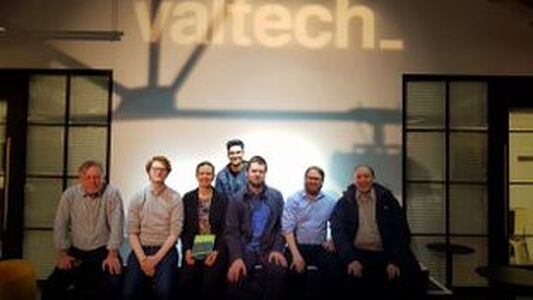
​Valtech and Ofgem have hosted the "Climate Emergency Hackathon" in London on Friday 31st January and Saturday 1st February 2020. The basis of this Hackathon was to get teams of data specialists and associated disciplines (Solution Architects, Business Analysts, Project Managers, UX and Developers) to determine a specific programme that will greatly reduce the CO2 production, in the United Kingdom, within five years.
​Ten teams were working on different solutions, using proprietary data from Ofgem, other sources from government websites, etc... Each team had complete freedom in deciding what aspects and technologies to pick up. Many fantastic ideas came up from all team members and the concept that prevailed in each one of them was presented to a board of judges composed of Valtech and Ofgem personnel. All teams gave very creative and productive presentations of their work that had to be completed in a short amount of time.
White Wolf Rising's CEO and CEN Co-Founder was a member of the winning team.

HOME    Login    Resources    Members    About Us    Contact    Join    Contributors
Policy     |    Terms    |    Charter    |    Contact
© Copyright 2026  White Wolf Rising Ltd       Branded by:  Conscious Branding​
Picture
  • Home
  • Login
  • Resources
    • Articles
    • Videos
    • Podcasts
    • Case Studies
    • Books
    • Interviews
    • Journey to Conscious Leadership
  • Projects
    • Education >
      • NGCLP
      • NGCLP 1 day Introduction
    • Business Transformation >
      • Certification Program
      • Conscious Business Transformation
    • Eco & Social Initiatives >
      • Geopolitics & Peace Project
      • Kola Product
      • LA VITA SUKHA
      • TOLI
      • Transformative Business Ethics
      • World Without Corruption
  • Charters
    • AI Charter
    • Peace Charter
  • Members
    • Associates
    • Statistics
  • News
  • About Us
    • Philosophy
    • Charter
    • Contributors
    • Contribute
    • Support Us
  • Contact
  • Operations
    • CRM
    • DCS
    • KOLA